
Private Label Green Tea from a China Factory: OEM Boxes, Brands, and What to Prepare
Private label tea sounds like a big project. In practice it is a small one: you choose a grade, you send your brand and artwork, the factory packs the tea in your box instead of a plain one, and the tea ships under your name. The tea itself does not change. What changes is who the customer sees on the shelf. Most first-time buyers get the order of work backwards — they design the box first and pick the tea second. Do it the other way round, and the whole thing goes faster. This is how private label works with a factory like ours, and what to have ready before you ask for a quotation.
What private label actually means here
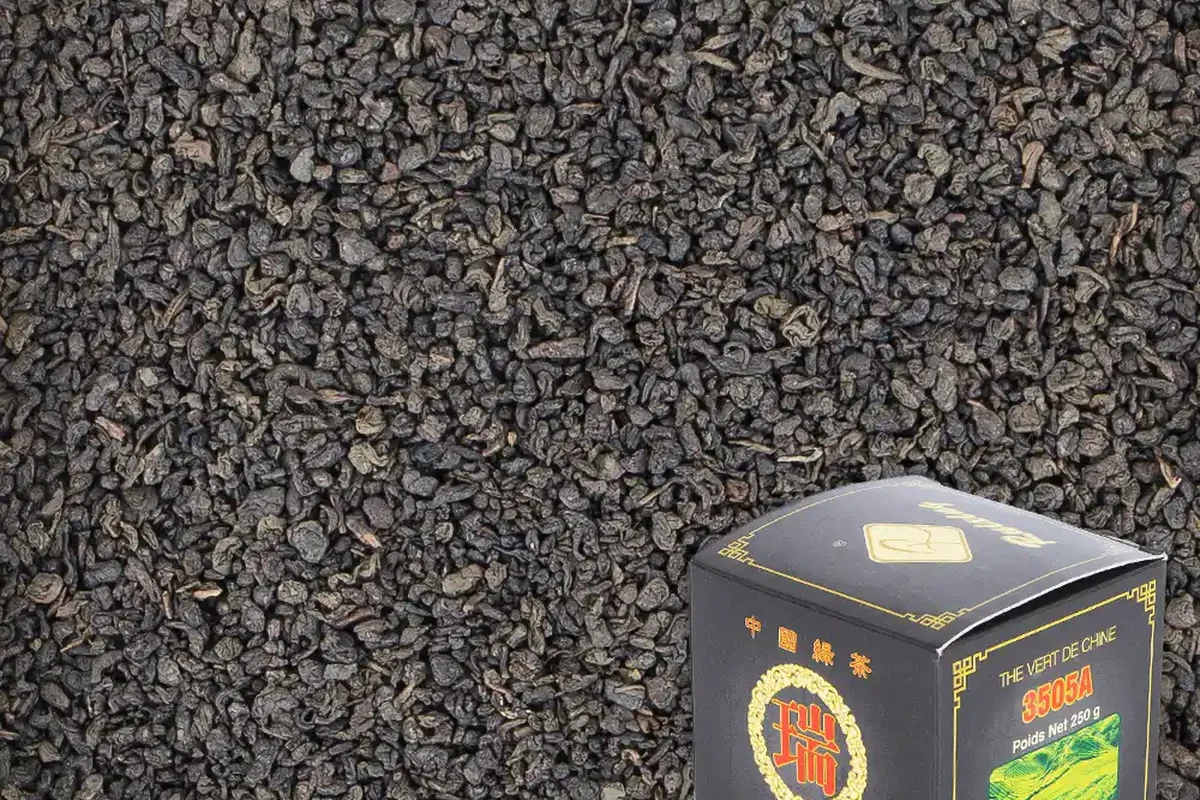
Private label, or OEM, means the factory produces and packs tea under your brand. The factory supplies the tea, the packing and the labour; you supply the brand name, the artwork and the decisions about grade and pack size. The tea inside your box is the same tea the factory sells in bulk — for example Gunpowder 3505 or Chunmee 4011 — so the quality question is settled before the branding question ever comes up. If you have not bought the grade before, start with a sample of the loose tea and decide on the tea first. A beautiful box cannot fix a grade your market does not want, and reprinting a box because you changed your mind about the tea is the most expensive mistake in this process.
Step 1: Choose the grade before you design the box
Your market decides the grade, not your designer. Moroccan mint tea drinkers expect a gunpowder like 3505; West African markets buy a lot of chunmee like 4011 and 41022; European retail usually wants an EU-standard line with residue testing. If you are unsure which grade your market buys, our gunpowder grades guide explains how the grades differ, and our chunmee 41022 vs 4011 vs 9371 comparison covers the main chunmee grades for Algeria and West Africa. Ask the factory for samples of the exact grades you are considering, and cup them the way your customers will drink them — plain, or as mint tea. Our cupping checklist shows how a factory judges a lot, and it works just as well for choosing between two grades. Only when the grade is settled should the box design start.
Step 2: Decide the pack size and the box
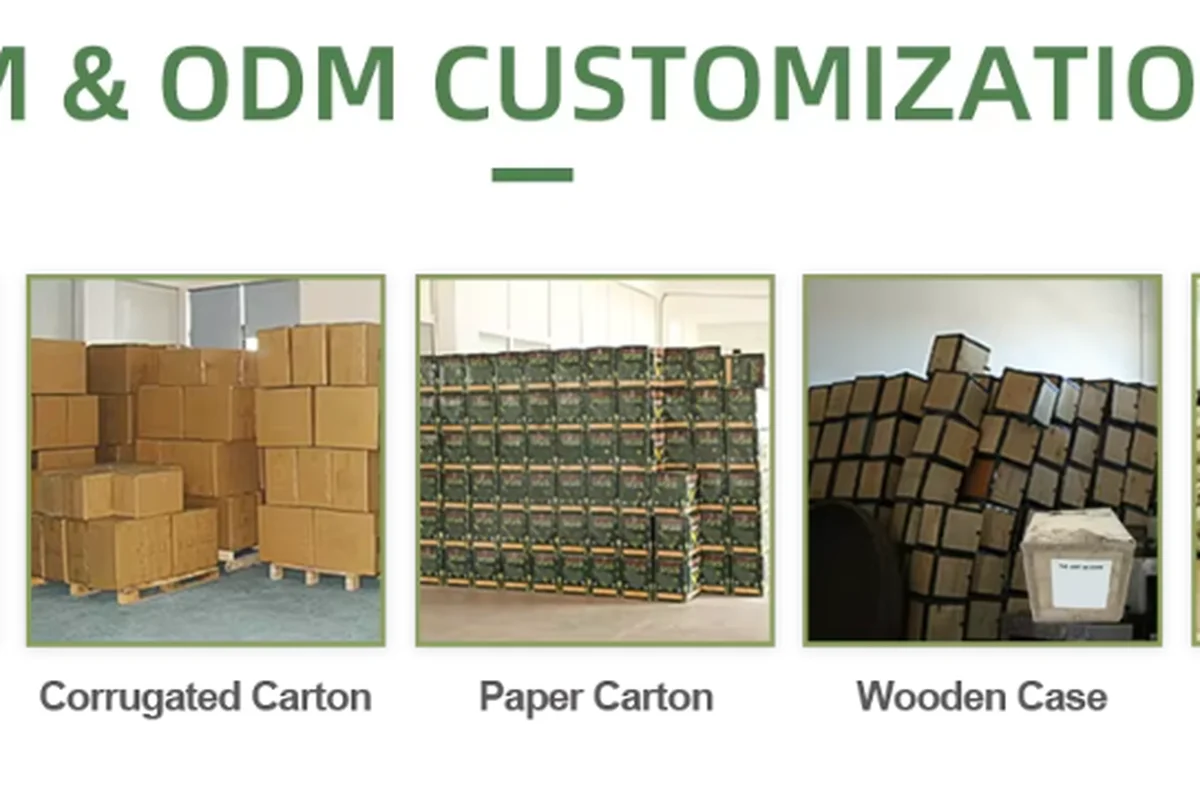
Pack size is a market decision too. The 25g box is the classic retail format in Morocco and much of West Africa; larger boxes and bulk packs suit wholesalers and food service. Our packaging guide for Africa compares the 25g box, 100g and bulk formats and what actually sells in each channel — read it before you commit to a size, because the size decides the box dimensions, the artwork layout and the carton packing. Tell the factory the pack size, how many units go in a carton, and whether you need an inner bag, a printed box, or both. If you already sell a box in your market, send the factory a photo and the dimensions of the one that works — that is worth more than a long description.
Step 3: Prepare the artwork the factory can actually print
This is where most first orders stall. A factory printer needs print-ready artwork, not a screenshot or a low-resolution image from a chat app. What to send: your brand name and logo in a vector or high-resolution file, the exact text for the front and back of the box in the language your market reads, and any colours specified as print values rather than screen colours. Say which parts of the box are fixed — your logo, your brand colours — and which parts the factory may adjust, such as the placement of the net weight or the factory’s own marks. If you do not have a designer, say so early: a factory that packs for export every week has seen hundreds of boxes and can usually suggest a workable layout, but it cannot invent your brand for you. Before artwork is approved, check the label text against your market’s rules yourself, or with your own agent — the factory knows its export paperwork, but the labelling rules of your country are your responsibility. For Europe, our guide to EU pesticide residue rules explains what to ask the factory for before ordering, including lot-by-lot test reports.
Step 4: Approve a sample and a printed proof before production
Never skip the proof. The factory should send you two things before full production: a sample of the tea from the lot you will receive, and a printed proof of your box — a physical box, or at least a printed flat, so you can check the colours, the spelling and the layout in your own hands. Check the proof against your artwork file word by word, including the small print, and check the tea sample with the same cupping routine you used to choose the grade. If anything is wrong, this is the moment to fix it, when the cost is one box, not a container. Ask the factory what it needs from you to start production, and what the current production schedule looks like — schedules move with the season, so ask for the current one rather than assuming a figure from a previous order or another supplier.
What to have ready: a one-page checklist
Send the factory these things and your order will move without the usual back-and-forth:
- Brand name and logo: the exact spelling, in print-ready files, and confirmation that the brand is yours to use in your market.
- Grade: the grade you have sampled and approved — for example 3505, 4011 or an EU-standard line — not a grade you have only read about.
- Pack size: the net weight per box or bag, and how many units go in a carton.
- Box artwork: front and back text in your market’s language, print-ready, with colours specified for print.
- Label checks: any mandatory label information your market requires, checked by you or your agent.
- Sample approval: confirmation that you have cupped the tea sample and approved the printed proof.
- Shipping plan: destination port and the documents you need — our Morocco import guide covers the documents and checks for a first order.
Mistakes that stall a first private label order
The same few mistakes cause most delays. Designing the box before choosing the grade, then reprinting when the grade changes. Sending artwork as a phone photo instead of a print-ready file, then waiting while it is redrawn. Approving the artwork without checking the small print, and finding a spelling error on a full production run. Ordering a pack size your market does not buy, because nobody checked what sells there. And skipping the tea sample because the last order was fine — lots change, and the sample is the only way to know. Every one of these is avoidable, and every one is cheaper to fix before production than after it.
About the factory
Shengzhou Ruixing Tea Industry Co., Ltd has made and exported gunpowder and chunmee tea since 1999, from Shengzhou City, Zhejiang — the country’s largest gunpowder tea production, processing and export distribution centre. The plant covers 30,000 sq m, with about 15,500 sq m of buildings, four tea manufacture workshops and a packaging workshop with an automated tea packaging line, supplied from 10,000 acres of tea-planting bases. Annual export sales are stable at more than $8 million, and we have supplied Moroccan companies DAMANDIS and STE.GROUPE BELLAKHDAR since 2002. Read more on our Company Profile.
Next step: tell us your brand, your grade and your pack size, and send your artwork when it is ready — we will send a tea sample and a printed proof before anything goes into production. Contact us to start.
FAQ for private label tea buyers
What does the factory need from me to start a private label order?
Your brand name and logo in print-ready files, the grade you have sampled and approved, the pack size and units per carton, and the box artwork with the text in your market’s language. With those, the factory can send you a tea sample and a printed proof before production. Ask the factory for its current minimum order and production schedule — they move with the season, so get the current figures, not a number from another supplier.
Can I put my own brand on Gunpowder 3505 or Chunmee 4011?
Yes — private label means the factory packs its tea under your brand. Choose the grade first, by sampling it the way your customers drink it, and only then design the box. The tea inside your box is the same tea the factory sells in bulk.
What pack sizes can I choose?
The 25g box is the classic retail format in Morocco and much of West Africa, with larger boxes and bulk packs for wholesalers and food service. Our packaging guide for Africa compares the 25g box, 100g and bulk formats — read it before you commit to a size, because the size decides the box dimensions and the artwork layout.
Do I need to approve a sample before production?
Yes — two things: a sample of the tea from the lot you will receive, and a printed proof of your box, so you can check the colours, spelling and layout in your own hands. If anything is wrong, fix it then, when the cost is one box, not a container.
What label information should I check for my market?
Check the labelling rules of your destination country yourself, or with your own agent — the factory knows its export paperwork, but your market’s labelling rules are your responsibility. For Europe, ask the factory for lot-by-lot residue test reports before ordering.
Recent Posts
-
-
-
-
-