


EU Pesticide Residue Rules for Chinese Green Tea: What European Importers Must Check Before Ordering
For a European green tea importer, the most expensive surprise is not a bad cup. It is a container that clears the factory, crosses the sea, and then fails a pesticide test at an EU border laboratory. The tea looks right, the price was right, and the grade number on the contract was one you have bought before — but the lot does not meet the EU’s residue rules, and now you are paying for storage, re-testing, and a shipment you cannot sell. This guide explains the rules in plain language, and the checks to make before you order — because almost everything that decides the outcome happens before the tea leaves China.
What “EU standard” means in practice
“EU standard” is not a grade number. It is a way of growing, processing and checking tea so that it meets the European Union’s pesticide residue rules. A factory that sells EU-standard tea manages it as a separate line: the leaf comes from bases that are controlled for the substances the EU tests for, and the finished tea is checked against EU limits before it ships. That is why our EU lines carry their own names — Gunpowder 3505AA EU Standard, Gunpowder 3505C low pesticide residue and Chunmee 41022AA EU Standard — rather than sharing a listing with the standard export grades. If you are comparing the two kinds of tea side by side, our EU standard vs export grades checklist explains the practical differences and what to put on your specification sheet.
MRLs, in plain language
The EU controls pesticide residues with maximum residue levels, or MRLs. An MRL is the highest amount of a particular substance that the law allows on a particular food — in this case, tea. The EU sets an MRL for each substance, and where no specific limit has been set, a low default limit applies. The test is done on the lot you are buying, not on the factory in general: a supplier can hold all the right certificates and still ship a lot that fails, if that lot was not grown and checked to EU limits. That is the single most important thing to understand about EU residue rules. They are lot-by-lot rules, and the evidence that matters is the evidence for your lot.
Five things to check before you order
- Is the tea from an EU-standard line? Ask the factory to confirm, in writing, that the tea you are buying was produced for the EU market and checked against EU residue limits. A standard export grade such as Gunpowder 3505 is a fine tea — but it is not automatically an EU-standard tea. The grade number tells you about the leaf; it does not tell you about the residue result.
- Ask for a recent lab report for the lot you are buying. A certificate of analysis, or lab report, is the document that shows what was tested and what was found. Ask for the report on your lot or batch, not a report from last year or from a different grade. If the factory cannot produce one for your lot, treat that as your answer.
- Check what the report actually covers. A report that tests for a handful of substances is not the same as one that covers the substances the EU tests for on tea. Ask which substances were tested and whether the list matches what your market’s laboratories check. If you are unsure, ask your own customs broker or laboratory which substances they expect to see.
- Ask how residue is controlled at origin. The reliable answer is about the tea base: which gardens the leaf comes from, what is and is not used on them, and how the factory keeps EU-standard leaf separate from standard export leaf. A supplier who can describe that plainly is usually one who does it. A supplier who answers with a certificate alone is worth a second question.
- Confirm the factory’s certifications — and what they do and do not prove. We hold ISO9001 quality management and ISO22000 food safety management certification. Those certificates say the factory runs a controlled quality and food safety system. They do not, on their own, prove that a given lot meets EU residue limits. That proof is the lab report for your lot.
How to read a lab report without being a chemist
You do not need to be a chemist to read a residue report — you need to check five things. The laboratory: a named, accredited lab, not an in-house note. The sample: the batch or lot number, and the date the sample was taken — it should match the lot you are buying. The substances tested: a list, not a single line. The results: each substance shown against its limit, with results marked “not detected” where nothing was found. The date: recent, for your lot — a report from a previous season does not cover this season’s tea. If any of those five is missing, ask for it before you pay. And if a result sits close to its limit, ask what the factory will do if a re-test comes back over — before the tea ships, not after.
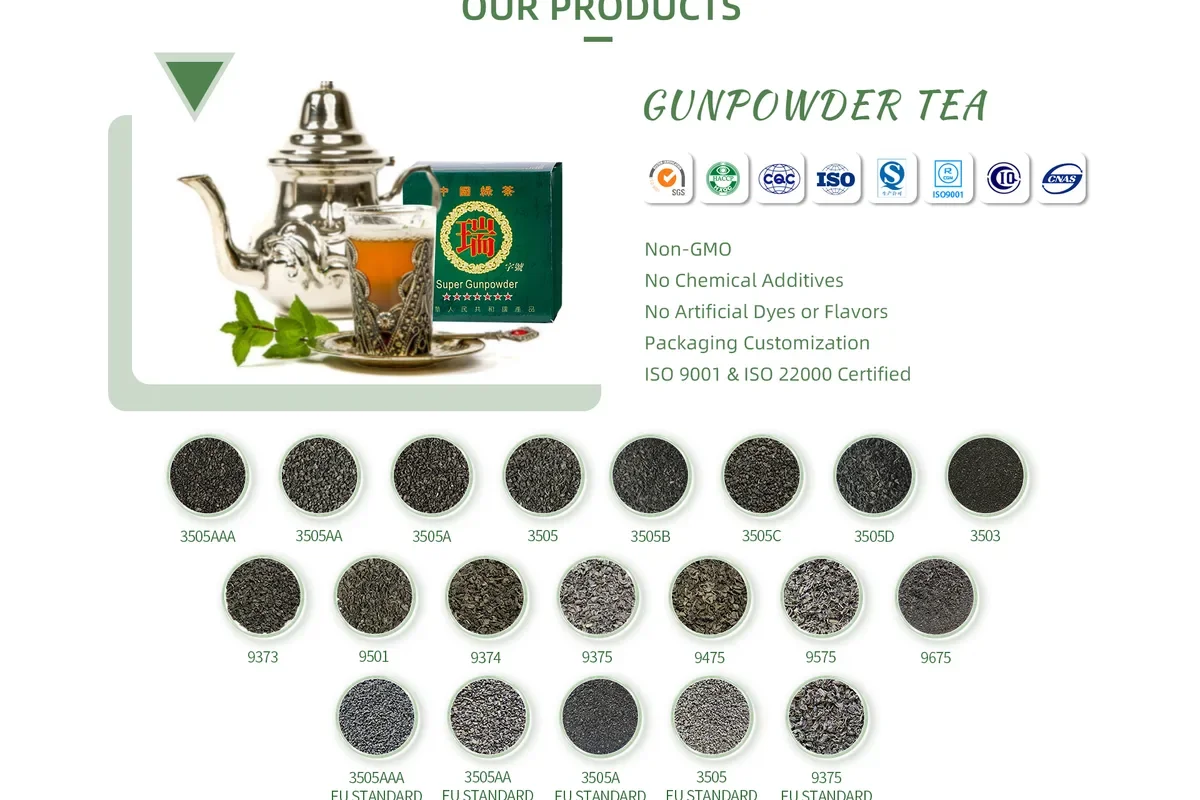
Grade numbers still matter for the cup — our gunpowder grades guide explains what each grade means — but a grade is a quality description, not a residue guarantee.
What happens if a lot fails at the border
If a lot fails an EU border check, it is held while the authorities decide what happens next. Depending on the member state and the finding, the lot may be re-tested, sent back, or destroyed — and the costs, storage and delay usually fall on the importer. That is why the checks in this guide are worth doing before you order: a rejected container costs far more than a lab report and a few pointed questions. If you are new to the chain from factory to port, our chunmee supply chain sourcing guide walks through the documents and the handover points. And if you already have a shipment in trouble, talk to your customs broker first — they know your port’s procedure; a factory can supply documents, but it cannot clear your goods for you.
About the factory
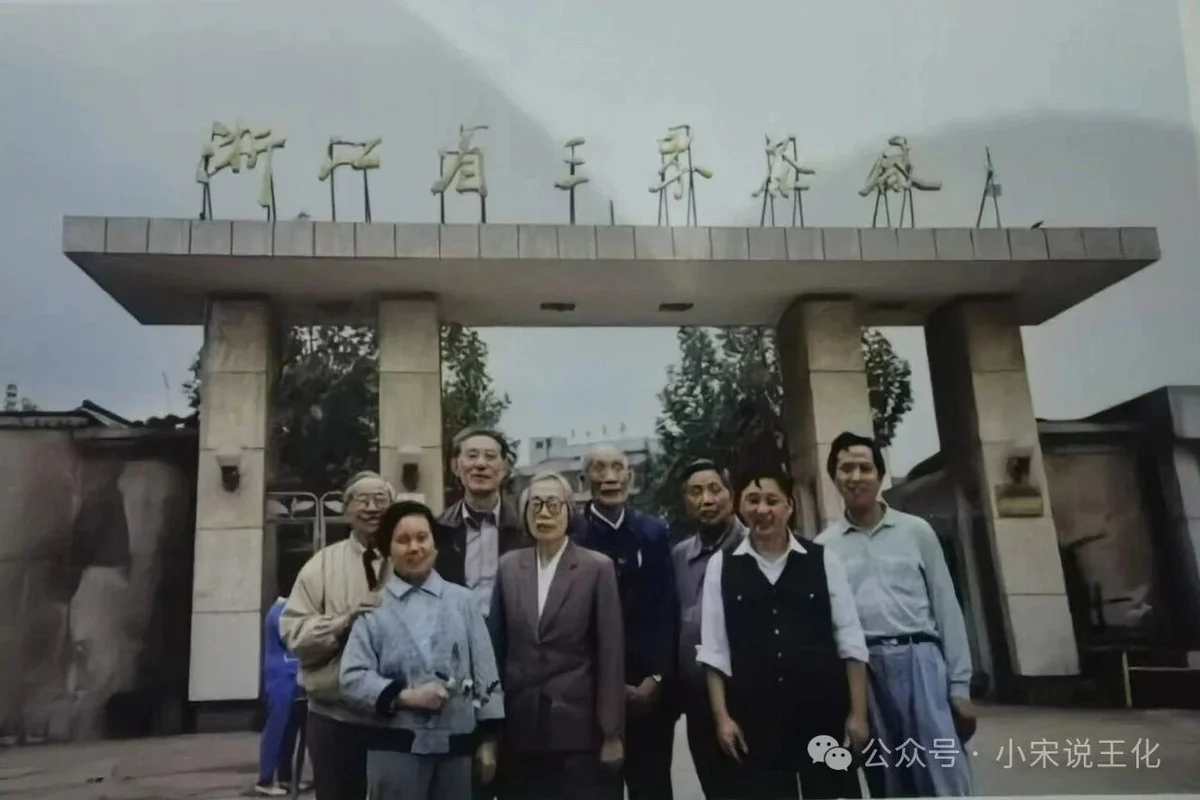
Shengzhou Ruixing Tea Industry Co., Ltd has made and exported gunpowder and chunmee tea since 1999, from Shengzhou City, Zhejiang — the country’s largest gunpowder tea production, processing and export distribution centre. The plant covers 30,000 sq m, with about 15,500 sq m of buildings, four tea manufacture workshops and a packaging workshop with an automated tea packaging line, supplied from 10,000 acres of tea-planting bases. Annual export sales are stable at more than $8 million, and we have supplied Moroccan companies DAMANDIS and STE.GROUPE BELLAKHDAR since 2002. Read more on our Company Profile.
Next step: tell us your market and the grades you need, and we will confirm which EU-standard lines fit and send the lab report for your lot. Contact us to start.
FAQ for European green tea importers
What does “EU standard” mean for Chinese green tea?
It means the tea was grown, processed and checked to meet the EU’s pesticide residue rules. The factory manages it as a separate line, from controlled tea bases, and checks the finished tea against EU limits before it ships — it is not the same as a standard export grade with the same grade number.
What is an MRL?
A maximum residue level: the highest amount of a particular substance the law allows on tea. The EU sets an MRL for each substance, and where no specific limit has been set a low default limit applies. The test is done on the lot you are buying, lot by lot.
What documents should I ask for before ordering?
Written confirmation that the tea is from an EU-standard line, and a recent lab report — a certificate of analysis — for your lot or batch, showing which substances were tested and the results against their limits.
Does a grade number like 3505 guarantee EU compliance?
No. The grade number describes the leaf — its size, curl and cup — not the residue result. A standard export 3505 is not automatically an EU-standard tea. Ask for the EU-standard line and the lab report for your lot.
What happens if my tea fails an EU pesticide test?
The lot is held at the border while the authorities decide what happens next. Depending on the member state and the finding, it may be re-tested, sent back, or destroyed — and the costs, storage and delay usually fall on the importer. That is why the checks in this guide are done before ordering.
Recent Posts
-
-
-
-
-