

How to Import Gunpowder Tea from China to Morocco: A First-Time Buyer’s Guide
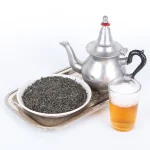
If you sell tea in Morocco, you already know the product. Gunpowder green tea is not a niche item there — it is the tea, poured from a height into small glasses, sweetened, and served with fresh mint several times a day. Most of it arrives from China, and most first-time buyers start in the same place: they know they want gunpowder tea, they have a rough idea of the grade, and they are not sure how the rest of the process works. This guide covers the order of decisions that actually matters, from choosing a grade to placing a first order with a factory.
Start with the grade, not the price
The single most common mistake first-time buyers make is asking for a price before settling on a grade. Gunpowder tea is sold by grade number, and the number decides what lands in your warehouse. For the Moroccan market, the standard starting point is Gunpowder Tea 3505: tightly rolled pellets, a strong brew that stands up to mint and sugar, and the grade Moroccan wholesalers and retailers ask for by name. If you are new to the trade, 3505 is the safe first order — it is the grade your customers already know how to sell.
That does not mean it is the only option. What Is Gunpowder Tea 3505? explains the grade in detail, but in short: 3505A, 3505AA and 3505AAA are finer, more uniform pellets from the same family, for buyers who want a cleaner cup and a more premium shelf presence. 9375 is a workhorse mid-grade that suits everyday mint tea at a lower cost, and 9475 and 9501 serve buyers who want a different balance of strength and price. A clear overview of how the grades differ is in our gunpowder tea grades guide, and the direct comparison in Gunpowder Tea 3505 vs 9375 is worth reading before you choose between the two most common Moroccan grades.
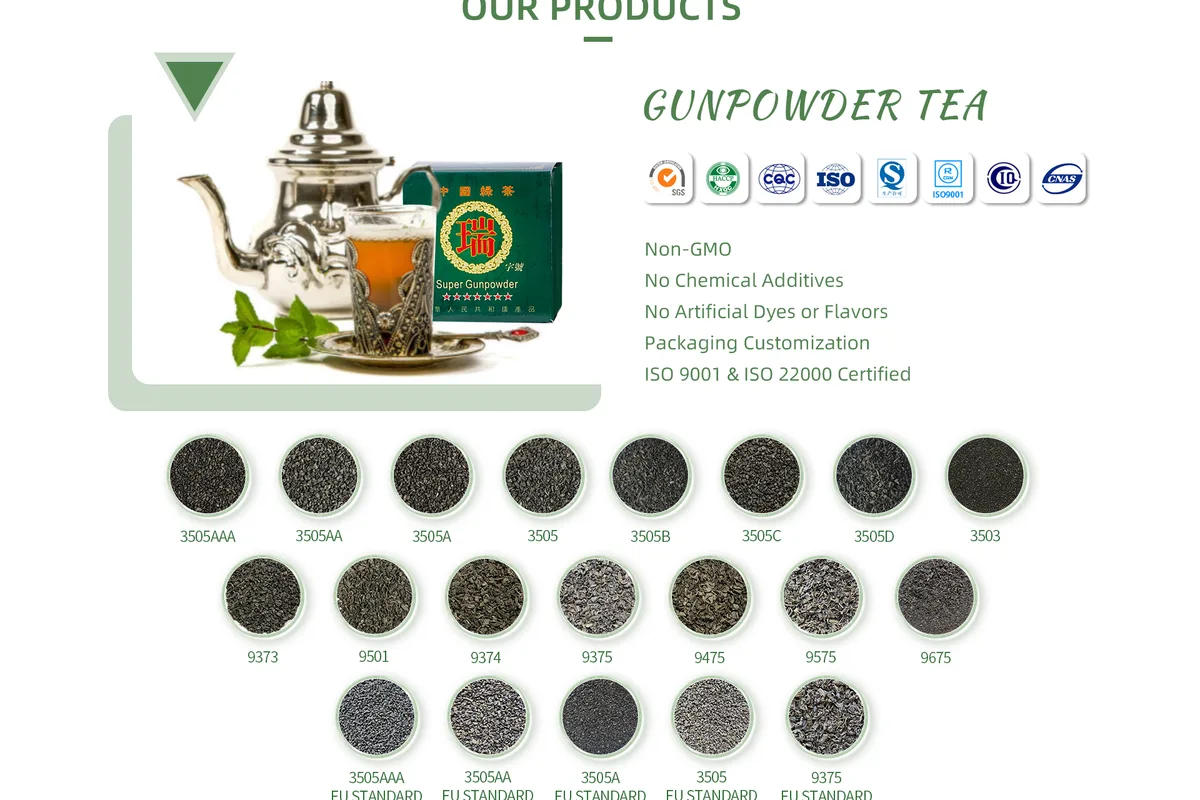
One practical tip: ask your supplier for samples of two grades, not one. Brew them the way your customers brew — with mint, with sugar, poured the Moroccan way — and let the cup decide. A grade that looks right on paper can taste wrong in a glass, and the cost of two sample packs is nothing next to a container of the wrong tea.
Check the factory before you check the quote
Morocco buys a lot of Chinese tea, which means there are a lot of sellers. Some are factories, some are trading companies, and both can be legitimate — but you should know which one you are dealing with, because it changes what you can ask for. A factory can show you its workshops, its packaging line, and its certificates. Ask for them.
Ruixing Tea, for example, is a factory in Shengzhou, Zhejiang — the area the industry describes as China’s largest gunpowder tea production, processing and export distribution centre. The company was founded in 1999 and expanded in 2002, runs a 30,000 sq m plant with four tea manufacture workshops and a packaging workshop with an automated tea packaging line, and draws on 10,000 acres of tea-planting bases. It holds ISO9001 quality management and ISO22000 food safety management certification, and its annual export sales are stable at more than $8 million. It has supplied Moroccan companies DAMANDIS and STE.GROUPE BELLAKHDAR since 2002. You can read the full background on our Company Profile page.
Before you commit, ask any supplier for these four things: a sample of the exact grade you plan to order, the factory’s ISO9001 and ISO22000 certificates, a recent lab report for the batch, and photos or video of the packing line. If a seller cannot provide them, that tells you what you need to know. And if you plan to sell onward into Europe at any point, read our EU Standard vs Export Grades buyer checklist — European buyers have their own documentation requirements, and it is cheaper to plan for them now than to re-source later.
Decide the packaging early
Packaging is not an afterthought in Morocco. The 25g box is the retail format most Moroccan consumers recognise, while bulk packing suits wholesalers who repack locally. The choice affects the price, the packing time, and the shipping weight, so settle it before you ask for a final quote — changing the pack size after the quote means starting the quote again.
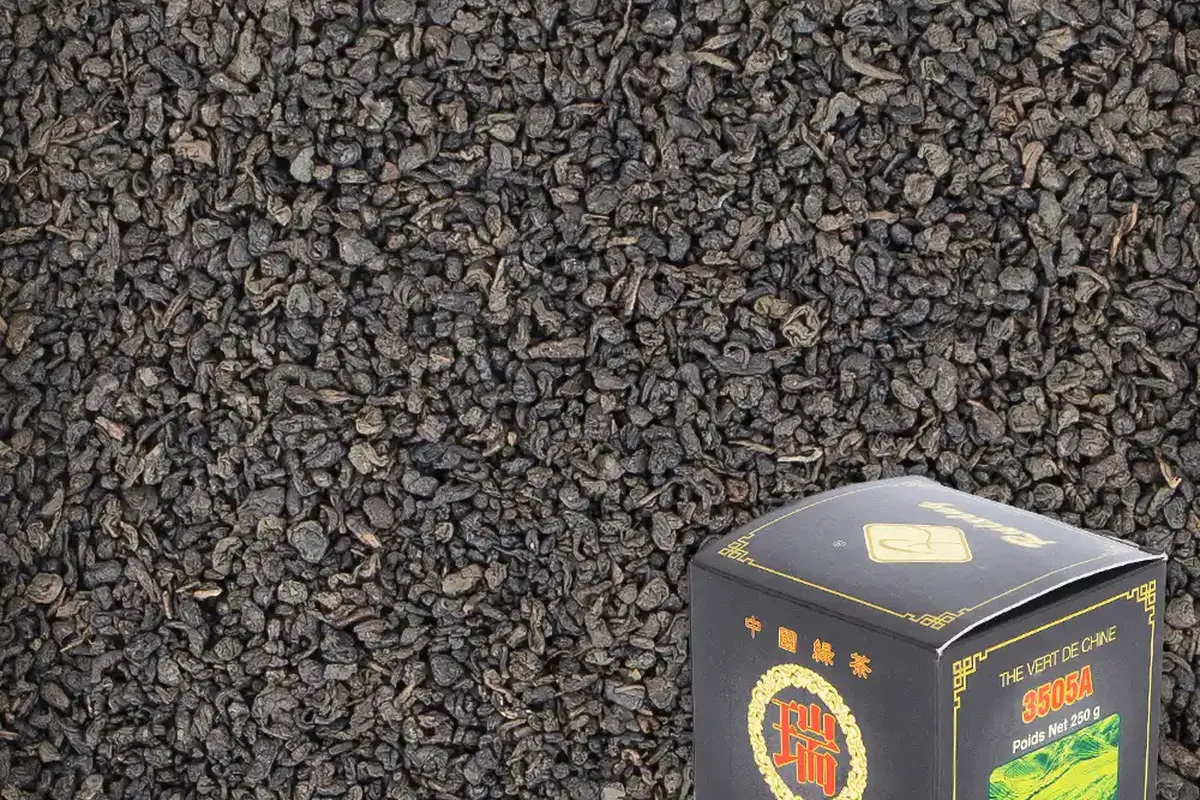
Ask your supplier what packaging formats they run on their own line, whether they can do your brand and artwork on the box, and what the minimum run is for a custom print. Do not assume a minimum order quantity — ask for it in writing, per grade and per pack size, because it varies. The same goes for lead time: ask how long production and packing take for your quantity, and get it confirmed before you promise dates to your own customers.
Documents, shipping, and the first order
Green tea is a food product, so the paperwork matters as much as the tea. Before you book anything, confirm with your supplier which export documents they provide — typically the commercial invoice, packing list, certificate of origin, phytosanitary certificate and health certificate — and check with your customs broker in Morocco which of these your clearance requires. Your supplier should also be able to tell you the net and gross weight per carton and per container, because that decides your freight cost.
On the commercial side, agree the Incoterm in writing (FOB is the usual starting point for first orders), confirm the payment terms before production starts, and ask whether a pre-shipment inspection is possible. A first order is also the time to confirm the practical details: how the tea is brewed for the Moroccan market — our guide to brewing gunpowder tea, Moroccan mint style vs Western style, is a useful reference if your team is new to the product — and how the tea should be stored on arrival, cool and dry, away from strong smells.
Put the order in this sequence and the process stays simple: choose the grade and get samples, confirm the factory and its certificates, fix the packaging and quantities, agree the documents and shipping terms, then place the order. If any step feels rushed, slow down at that step — a week spent checking a supplier is cheaper than a container you cannot sell.
Ready to start?
If you are buying gunpowder tea for Morocco for the first time, start with a sample request. Tell the factory your grade, your pack size, and your market, and ask for the sample, the certificates, and the written quote together. You can reach our team through the Contact Us page — we have supplied the Moroccan market since 2002, and we would rather answer ten questions before an order than one complaint after it.
FAQ for Moroccan green tea importers
Which gunpowder tea grade is best for Morocco?
For the Moroccan market, the standard starting point is Gunpowder Tea 3505: tightly rolled pellets and a strong brew that stands up to mint and sugar. 3505A, 3505AA and 3505AAA are finer, more uniform pellets for a more premium shelf presence, while 9375 is a workhorse mid-grade for everyday mint tea.
How do I check a Chinese tea factory before ordering?
Ask for a sample of the exact grade you plan to order, the factory’s ISO9001 and ISO22000 certificates, a recent lab report for the batch, and photos or video of the packing line. Check the company’s background on its Company Profile page — for example, Ruixing Tea was founded in 1999, runs a 30,000 sq m plant in Shengzhou, and has supplied Moroccan companies DAMANDIS and STE.GROUPE BELLAKHDAR since 2002.
What packaging should I choose for the Moroccan market?
The 25g box is the retail format most Moroccan consumers recognise, while bulk packing suits wholesalers who repack locally. Settle the pack size before you ask for a final quote, and ask the supplier in writing for the minimum run for custom printing and the minimum order quantity per grade and pack size.
Which documents do I need to import green tea into Morocco?
Confirm with your supplier which export documents they provide — typically the commercial invoice, packing list, certificate of origin, phytosanitary certificate and health certificate — and check with your customs broker in Morocco which of these your clearance requires.
What should I agree before placing my first order?
Choose the grade and get samples, confirm the factory and its certificates, fix the packaging and quantities, and agree the documents, the Incoterm (FOB is the usual starting point), the payment terms, and whether a pre-shipment inspection is possible — all in writing, before production starts.
Recent Posts
-
-
-

-
-