


How to Cup Gunpowder 3505 Like a Factory QC: Leaf, Liquor, and Aroma Checklist
A bag can say 3505 and still not be the tea you want. The grade number describes a style, not a lot: two lots of the same grade can look, smell and taste quite differently, depending on the leaf, the rolling and the season. That is why every factory runs a cupping table before a shipment leaves, and why a buyer who learns the same routine can stop a bad lot before paying for it. Cupping is not complicated. It is five checks, done in the same order every time, on a small sample, with plain water and no mint or sugar. This is how our own quality controllers cup Gunpowder 3505, and how you can do the same with the sample in front of you.
Cupping is not the same as brewing
Brewing is about making a drink you enjoy. Cupping is about judging a lot. So the setup is deliberately plain: a small weighed amount of leaf, freshly boiled water left to cool a little, a white cup or bowl so you can see the liquor clearly, and nothing added — no mint, no sugar, no milk. The usual factory routine is about 3 grams of leaf to a small cup of water, steeped for a few minutes, with the same amount and the same timing for every sample you compare. That sameness is the point. If two lots are cupped differently, you cannot tell whether the difference is in the tea or in the way you made it. If you want the drinking version instead, our guide to brewing gunpowder tea, Moroccan mint style vs Western style, covers that — but for judging a lot, keep it plain.
Step 1: Look at the dry leaf
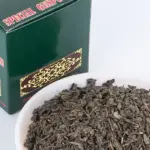
Pour a small amount onto a white plate and look before you smell or taste anything. Good 3505 rolls into tight, small, even pellets — the classic gunpowder shape — with a dark green colour that is fairly even across the sample. What to note: are the pellets mostly the same size, or is the sample a mix of big and small? Is there dust at the bottom of the bag, or broken leaf and stems mixed in? A little variation is normal in a natural product, but a sample that is mostly dust, stems or uneven pellets will not brew evenly, and it is not what 3505 should look like. If you are still learning what the grades look like, our guide to Gunpowder 3505 explains the grade, and the gunpowder grades guide shows how 3505 sits against the other grades.
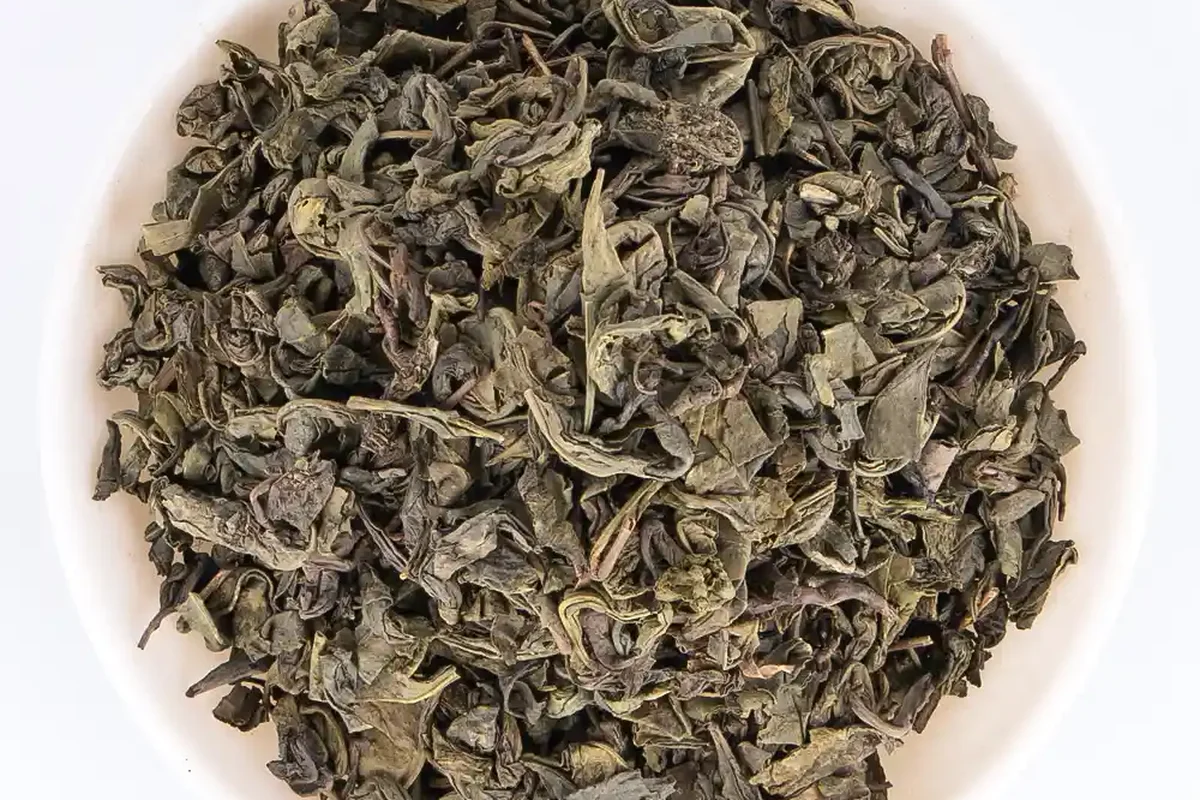
Step 2: Smell the dry leaf, then the wet leaf
Warm the dry leaf in your hands or in the cup and smell it: fresh gunpowder tea smells clean and green, with a light roasted note from the rolling and firing. A stale, musty or smoky smell is a warning — the leaf may have been stored badly or kept too long. Then pour the water on, cover the cup for a minute, and lift the lid and smell again. The wet leaf should smell fuller and sweeter than the dry leaf, with no sour or burnt edge. If the aroma disappears the moment the water hits it, the leaf is probably old. Write down what you smell in plain words — fresh, grassy, roasted, flat, musty — because two samples cupped side by side are much easier to compare from notes than from memory.
Step 3: Read the liquor
Pour the infusion into a white cup and look at it against a white background. A good 3505 liquor is a clear yellow-green, bright rather than dull, with no cloudiness and no dark specks floating in it. Colour alone does not prove quality — a darker liquor can simply mean a longer steep — so judge it together with the other checks, but a cloudy or grey-looking liquor is a real defect, and a liquor that turns dull within minutes suggests leaf that has lost its freshness. This is also the moment to check what the factory can document: residue testing is part of the quality picture for many buyers, and our guide to EU pesticide residue rules explains what to ask for before ordering, including lot-by-lot test reports.
Step 4: Taste it plain
Take a spoonful, slurp it so it spreads across the tongue, and spit it out — that is how professionals taste, and it keeps your palate fresh across several samples. Good 3505 tastes smooth and full, with a gentle sweetness underneath and a clean finish that does not linger as bitterness. Some astringency is normal for green tea, but it should fade quickly; a harsh, bitter or sour taste that stays on the tongue is a fault, not a character. Taste the same lot twice — once hot, once as it cools — because a tea that tastes fine hot and turns flat or sour as it cools will not hold up in a customer’s cup. If you are comparing 3505 with a lower grade, our 3505 vs 9375 comparison explains where the difference shows up in the cup.
Step 5: Look at the spent leaf
After the liquor is poured off, tip the wet leaf onto a plate. Good pellets unfurl into whole, even leaves with a bright green colour. What to note: is the leaf mostly whole, or mostly broken pieces? Is the colour even, or are there brown or yellow patches? Broken, dull leaf usually means rough handling or old stock, and it brews a liquor that goes flat fast. The spent leaf is the most honest part of the cupping — the dry leaf can be polished by rolling, but the wet leaf shows what the factory actually bought.
A one-page scorecard for your next sample
Take this list to your next sample and score each line in a few words. It takes five minutes, and it turns a vague impression into something you can compare lot to lot.
- Dry leaf: pellets tight, small and even? Colour dark green and even? Much dust, stems or broken leaf?
- Dry aroma: clean and green, with a light roasted note? Or stale, musty or smoky?
- Wet aroma: fuller and sweeter than the dry leaf? Any sour or burnt edge?
- Liquor: clear yellow-green and bright? Cloudy, dull or speckled?
- Taste: smooth and full, gentle sweetness, clean finish? Or harsh, bitter or sour that lingers?
- Spent leaf: whole, even, bright green when unfurled? Or broken, dull or patchy?
- Overall: would you buy this lot again — and would you be happy if your customer cupped it the same way?
Cupping a lot before you order
Ask the factory for a sample of the exact lot you would be buying, not a sample of a different lot, and cup it against the sample you approved last time — or against a reference sample you keep. Cup the new sample and the reference side by side, with the same leaf amount, water and timing, and run through the scorecard above. If the new lot is clearly worse, say so before the order is confirmed, and ask what changed. A good factory expects this: cupping is how lots are judged at origin, and a buyer who cups is a buyer who is easy to serve well. Our Morocco import guide covers the rest of a first order — documents, packing and what to confirm before you pay.

About the factory
Shengzhou Ruixing Tea Industry Co., Ltd has made and exported gunpowder and chunmee tea since 1999, from Shengzhou City, Zhejiang — the country’s largest gunpowder tea production, processing and export distribution centre. The plant covers 30,000 sq m, with about 15,500 sq m of buildings, four tea manufacture workshops and a packaging workshop with an automated tea packaging line, supplied from 10,000 acres of tea-planting bases. Annual export sales are stable at more than $8 million, and we have supplied Moroccan companies DAMANDIS and STE.GROUPE BELLAKHDAR since 2002. Read more on our Company Profile.
Next step: ask us for a sample of the lot you want to buy, cup it with this checklist, and tell us what you find — we will talk through the result with you. Contact us to start.
FAQ for green tea quality buyers
How much leaf should I use to cup gunpowder tea?
The usual factory routine is about 3 grams of leaf to a small cup of water, steeped for a few minutes. The exact amount matters less than keeping it the same for every sample you compare — same leaf amount, same water, same timing — so any difference you taste is in the tea, not in the way you made it.
What should good 3505 look like dry?
Tight, small, even pellets with a dark green colour that is fairly even across the sample. A sample that is mostly dust, stems, broken leaf or uneven pellets will not brew evenly, and it is not what 3505 should look like.
What colour should the liquor be?
A clear yellow-green, bright rather than dull, with no cloudiness and no dark specks. Colour alone does not prove quality — a longer steep makes a darker liquor — so judge it together with the aroma, the taste and the spent leaf.
Why taste the tea plain, without mint or sugar?
Because mint and sugar hide faults. Cupping is for judging a lot, so the setup is deliberately plain: leaf, water, and nothing added. Once the lot passes, brew it the way your customers drink it — our brewing guide covers the Moroccan mint tea method.
Should I cup the sample against something?
Yes — cup every new sample side by side with the sample you approved last time, or a reference sample you keep, using the same leaf amount, water and timing. Ask the factory for a sample of the exact lot you would be buying, not a sample of a different lot.
Recent Posts
-
-
-
-
-