Chinese Green Tea: A Thousand Years of Culture in a Single Cup
From Shennong tasting a hundred herbs to modern wellness lifestyles, green tea remains the most vibrant sensory symbol of Chinese civilization.
1. Shennong’s Discovery: The Origin Legend of Green Tea
In 2737 BCE, legend has it that the mythical emperor Shennong was boiling water outdoors when a few tea leaves drifted into his pot. After drinking, he felt instantly refreshed and clear-headed — thus tea entered the life of the Chinese people. While this millennia-old tale cannot be verified, it captures the essence of green tea’s first encounter with Chinese civilization with remarkable precision: natural, serendipitous, yet profoundly consequential.
Archaeological evidence pushes China’s tea history even further back. In 2016, tea specimens unearthed from the Han Yangling Mausoleum were dated to approximately 2,100 years ago — the oldest known physical tea remains in the world. Meanwhile, *The Classic of Tea* (Cha Jing), authored by Lu Yu in 760 CE during the Tang Dynasty, stands as the world’s first systematic treatise on tea, opening with the declaration: “Tea is the finest tree of the southern regions.”
2. From Medicine to Beverage: The Cultural Evolution of Green Tea
Han–Wei Period: Food as Medicine
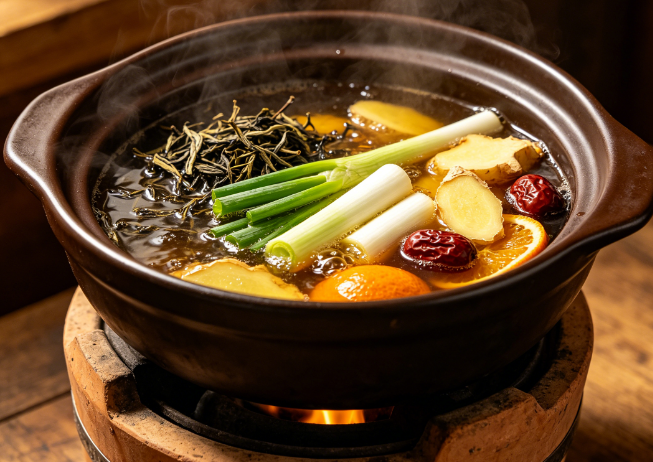
In its earliest use, green tea was not a beverage but a medicinal food. The Han Dynasty’s *Shennong Bencao Jing* (Divine Farmer’s Materia Medica) records: “Shennong tasted a hundred herbs, encountering seventy-two poisons in a single day, and was cured by tu.” Here “tu” is the ancient name for tea. At that time, people boiled tea leaves together with scallions, ginger, jujubes, and orange peel to create medicinal soups.
Tang Dynasty: The Art of Decoction
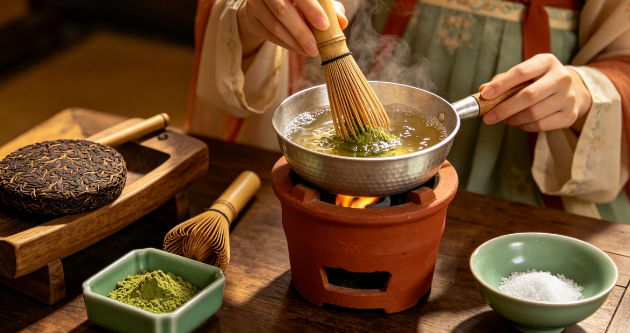
The Tang Dynasty marked the first golden age of green tea culture. Lu Yu’s *Classic of Tea* systematically documented every aspect of tea — cultivation, harvesting, processing, and appreciation — elevating tea from daily sustenance to a cultural ritual. The decoction method (*jiancha*) prevailed: tea cakes were ground into powder, boiled in water, and seasoned with salt. The emergence of Lu Yu as the “Sage of Tea” signaled the formal establishment of the Chinese tea ceremony (茶道, *cha dao*).
Song Dynasty: The Beauty of Whisked Tea
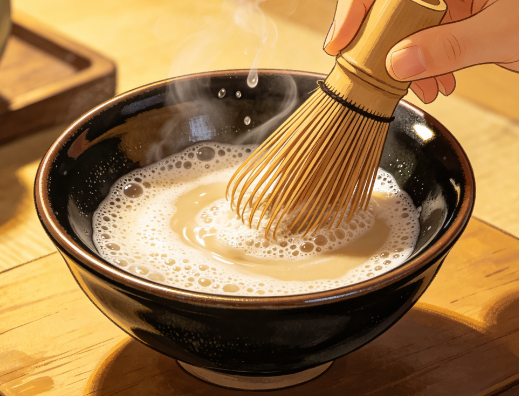
The Song Dynasty pushed green tea culture to its zenith. The whisked tea method (*diancha*) replaced decoction: tea powder was placed in a bowl, hot water was poured over it, and a bamboo whisk (*chaxian*) was used to beat the mixture into a fine, creamy foam. Tea competitions (*doucha*) flourished — from the imperial court to common households, people gathered around tea, making friends and discussing philosophy. Emperor Huizong personally authored the *Daguan Chalun* (Treatise on Tea), elevating the tea ceremony to the level of art and philosophy.
Ming–Qing Dynasties: The Simplicity of Steeping
In the Ming Dynasty, the Hongwu Emperor issued an edict to “abolish compressed tea in favor of loose leaf,” making the steeping method the mainstream. This reform returned green tea to its essence — simply placing leaves in a cup, pouring hot water over them, and savoring the pure, unadulterated flavor. This minimalist approach has endured to the present day, becoming the most familiar way people around the world enjoy green tea.
3. The Craftsmanship Code of Green Tea
The defining process of Chinese green tea is “fixation” (*shaqing*) — the application of high heat to deactivate enzymes in the leaves, preventing the oxidation of polyphenols and thereby preserving the tea’s natural green color and fresh aroma. Based on the fixation method, green tea falls into four main categories:
| Type | Fixation Method | Representative Teas | Characteristics |
|---|---|---|---|
| Pan-fired (Chaoqing) | Wok pan-firing | West Lake Longjing, Biluochun | High fragrance, rich and mellow taste |
| Oven-dried (Hongqing) | Hot-air drying | Huangshan Maofeng, Taiping Houkui | Elegant fragrance, fresh and brisk taste |
| Sun-dried (Shaiqing) | Sunlight drying | Dianqing, Chuanqing | Natural flavor, post-fermentation potential |
| Steam-fixed (Zhengqing) | Steam fixation | Enshi Yulu | Vibrant green color, preserves original character |
📘 Note: The steam-fixation method originated in the Tang Dynasty, was later transmitted to Japan, and evolved into matcha production. In China, it developed into renowned teas such as Enshi Yulu. This cross-border transmission illustrates the global influence of green tea culture.
4. A Tour of Famous Teas: Each Region, Its Own Character
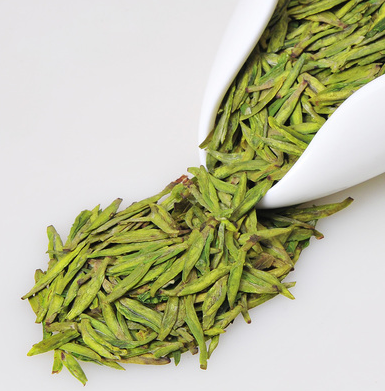
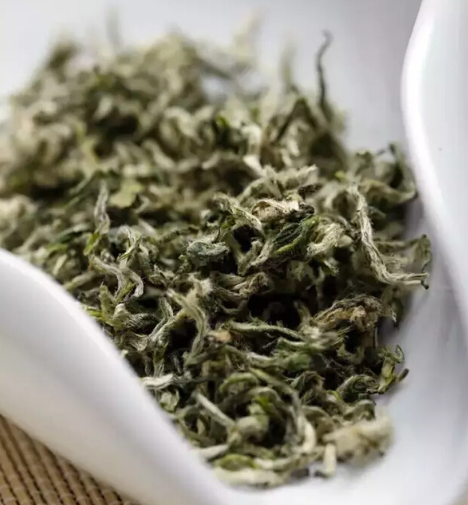
Produced on Dongting Mountain by Taihu Lake, famed for “beautiful shape, vivid color, intense fragrance, and mellow taste.” The curled, snail-shaped leaves covered in silvery down release a long-lasting, refreshing aroma when steeped. It is celebrated for “three fresh qualities” — fresh color, fresh fragrance, and fresh taste.
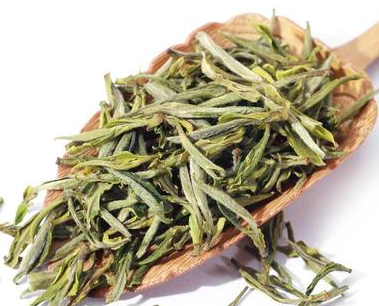
Produced in the Huangshan Scenic Area, the slightly curled leaves resemble finch tongues, blanketed in silvery down. When steeped, the liquor is clear and pale green with an orchid-like fragrance and a mellow, sweet taste. Premium-grade Maofeng is harvested around the Qingming Festival, using one bud with one leaf just beginning to unfurl for the finest quality.
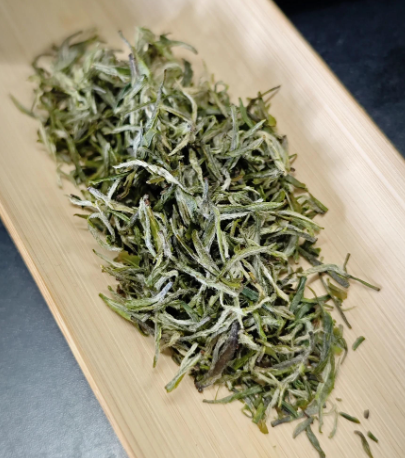
Characterized by “fine, round, smooth, straight leaves with abundant silvery tips, high fragrance, strong flavor, and green liquor.” Produced in the Dabie Mountain region, it won a gold medal at the 1915 Panama–Pacific International Exposition and is the most celebrated green tea of northern China.
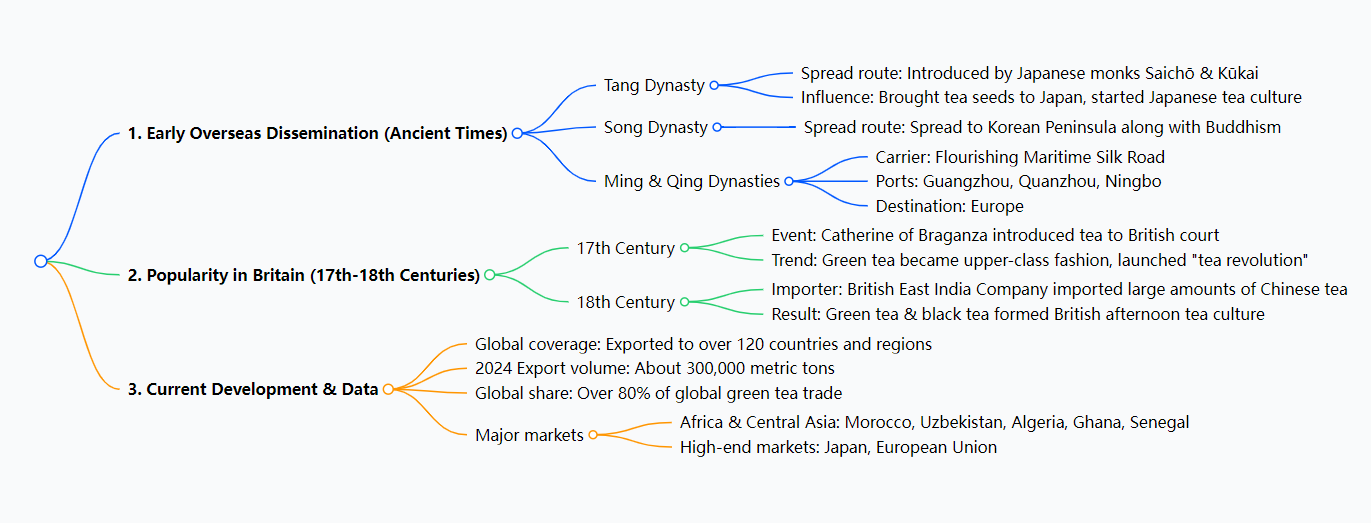
5. Green Tea’s Global Journey
6. Green Tea Through the Lens of Modern Science
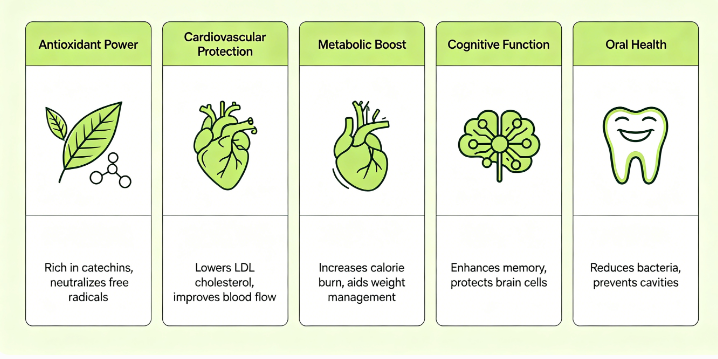
Modern scientific research has provided robust evidence for green tea’s health benefits:
7. The Art of Appreciation: How to Brew a Perfect Cup of Green Tea
Choosing the Vessel
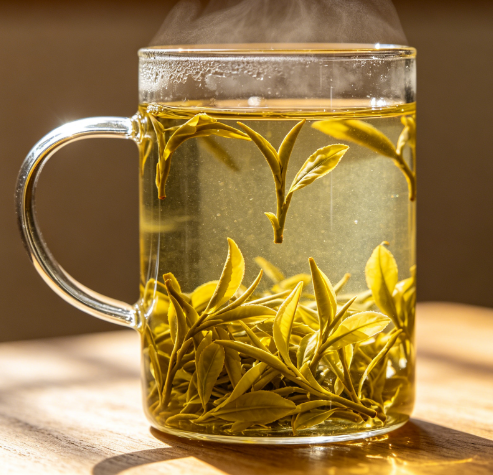
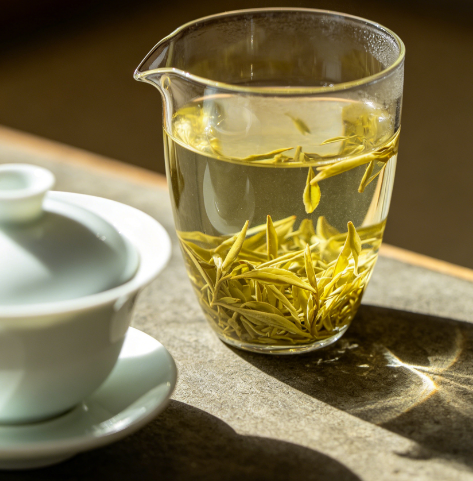
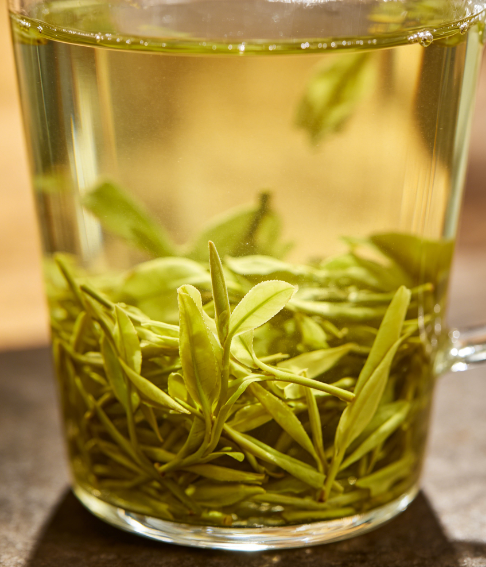
A glass cup is ideal, allowing you to admire the leaves unfurling gracefully. A white porcelain gaiwan is a close second — it does not interfere with the tea’s aroma.
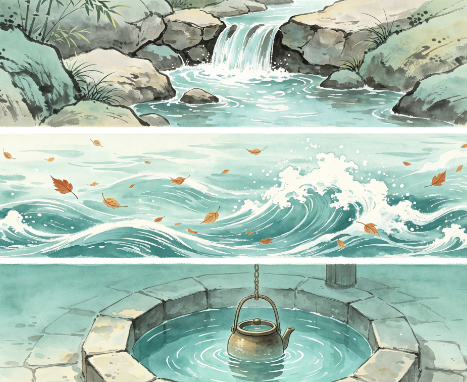
- Selecting the Water
- “Mountain spring water is best, river water is second, well water is worst.” — Lu Yu, *The Classic of Tea*. For modern brewing, use purified or mineral water, and avoid tap water, as chlorine can distort the tea’s flavor.
- Controlling the Temperature
- Green tea is delicate. The optimal water temperature is 80–85°C (176–185°F). Let freshly boiled water cool for about two minutes. Water that is too hot produces a bitter, astringent brew; water that is too cool fails to release the aroma.
Adding the Leaves
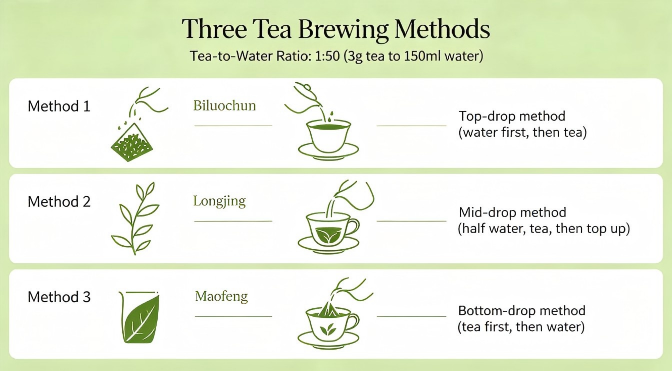
A tea-to-water ratio of approximately 1:50 is recommended — 3 grams of tea per 150 milliliters of water. Three methods apply:
Top-drop method** (water first, then tea): suitable for compact, tightly curled teas like Biluochun.
Mid-drop method** (half-fill with water, add tea, then top up): ideal for flat-shaped teas like Longjing.
– Bottom-drop method** (tea first, then water): best for loose, open-leaf teas like Maofeng.
- Savoring the Brew
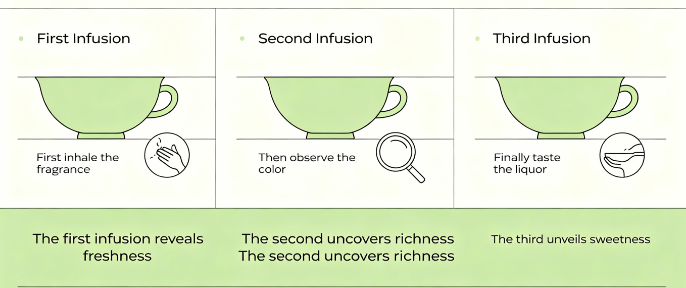
- First inhale the fragrance, then observe the color, and finally taste the liquor. Green tea can generally be steeped three to four times, with each infusion steeping 10–15 seconds longer than the last. The first infusion reveals freshness, the second uncovers richness, and the third unveils sweetness.
From Shennong tasting a hundred herbs to molecular research in modern laboratories, from Lu Yu’s *Classic of Tea* to global trade networks, green tea remains China’s green ambassador in dialogue with the world. A single cup of green tea carries not only three millennia of cultural memory but also the Eastern wisdom of harmony between humanity and nature.
In our fast-paced modern lives, take a moment to slow down and brew yourself a cup of green tea. Watch the leaves gracefully unfurl in the water, like flowers blooming. Inhale the delicate fragrance as it rises, refreshing the spirit. Take a sip of that clear essence, and feel a thousand years of time flowing across your palate.
Recent Posts
-

-
-
-
-