China Green Tea Supplier for Gunpowder tea & Chunmee tea – Direct Factory OEM Exporter to Middle East, Africa, Europe
What Is a Reliable China Green Tea Supplier?
A reliable China green tea supplier provides consistent quality Gunpowder tea and Chunmee tea, transparent grading, and stable bulk capacity, backed by HACCP/ISO certifications and proven export records to main consuming countries. For B2B buyers, the ideal partner is a factory‑based exporter in regions like Zhejiang with competitive pricing, flexible OEM/private label packaging, and familiarity with trade terms such as FOB and CIF for Africa, the Middle East, and Europe.
Key characteristics of a strong China green tea supplier:
- Own or tightly controlled factory in green tea origins such as Zhejiang
- Focus on Gunpowder tea (3505, 9501, 9475, 9375, Temple of Heaven, etc.) and Chunmee tea (41022, 4011, 9371, etc.)
- HACCP and ISO quality systems, with clear moisture, color, and leaf grade standards
- Experience exporting to Morocco, North/West Africa, Middle East, and European markets
- OEM/private label capabilities (bulk sacks, cartons, retail boxes, branded packs)
- Ability to quote stable prices and manage seasonal harvest and freight fluctuations
What Is Gunpowder Tea?
Gunpowder tea is a traditional Chinese green tea where leaves are tightly rolled into small pellets that resemble grains of gunpowder, producing a strong, brisk, and slightly smoky cup when infused. It is widely produced in provinces like Zhejiang and is particularly popular in North Africa and parts of the Middle East and Central Asia, where it forms the base of mint tea and blended green tea products.
Gunpowder green tea in trade context:
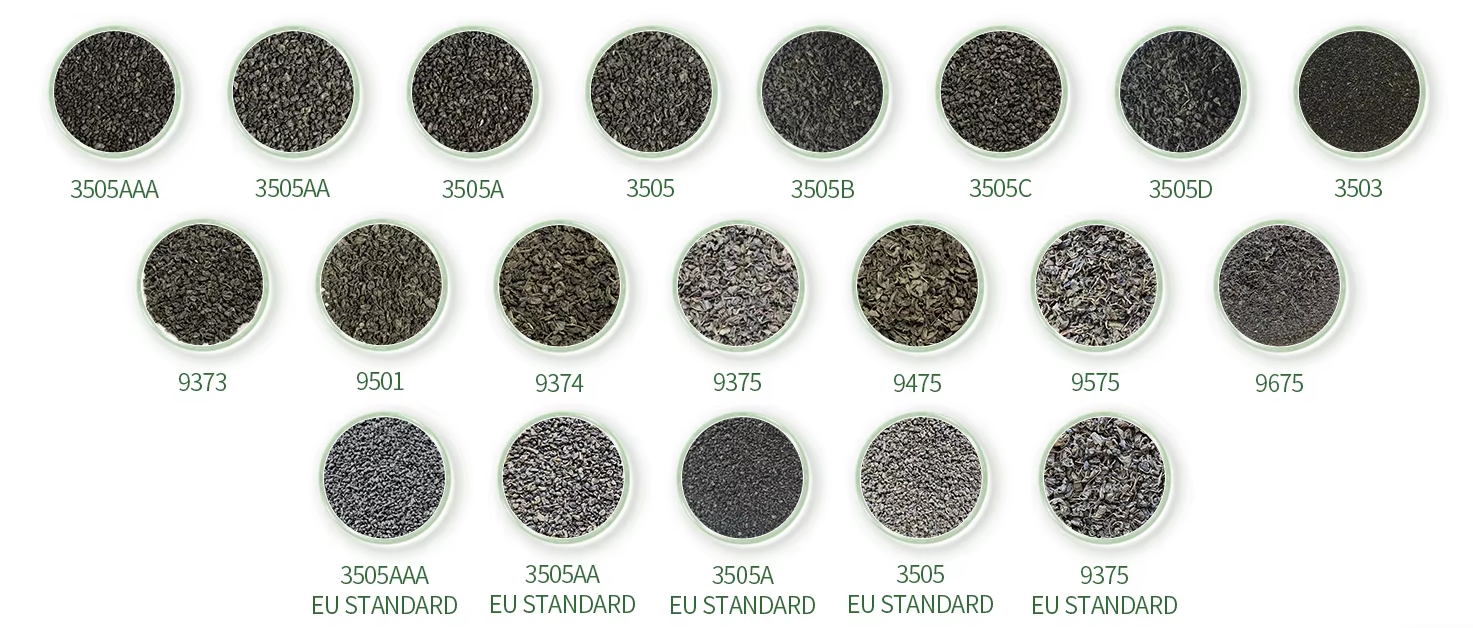
- Typical grades: 3505AAA, 3505AA, 3505A, 3505, 3505B, 3505D, 9501, 9373, 9375, 9475, 9575, 9675 “Temple of Heaven” (premium)
- Appearance: round pellets, uniform size, grey‑green to dark green color
- Cup profile: strong body, slightly smoky, suitable for blending with mint or sugar
- Markets: Morocco, Algeria, Mali, Mauritania, Senegal, Uzbekistan and European ethnic channels.
What Is Chunmee Tea?
Chunmee (“precious eyebrow”) is a Chinese green tea with leaves shaped into fine, curved strips that resemble eyebrows, known for its clear liquor, bright color, and more delicate, slightly tangy taste compared with Gunpowder. It is one of the main fried green teas produced in provinces such as Zhejiang, Anhui, and Jiangxi and is a standard item in African and Middle Eastern markets.
Chunmee green tea in trade context:
- Typical grades: 41022, 4011, 9371, 9366, 3008, etc.
- Appearance: slim, curved leaves, grey‑green color with some sheen
- Cup profile: lighter body, bright taste, slightly astringent and clean
- Markets: many African countries and Middle Eastern buyers use Chunmee tea for both loose and packed retail tea.
Gunpowder Tea vs Chunmee Tea
These two teas dominate the “bulk China green tea” export business, but they serve slightly different price points, tastes, and applications.
Core differences
- Flavor
- Gunpowder tea: stronger, fuller body, sometimes slightly smoky; good for mint blends and high‑strength brews.
- Chunmee tea: lighter, brighter, more tangy and astringent, often perceived as “cleaner” for straight green tea.
- Appearance
- Gunpowder tea: tightly rolled pellets, more spherical.
- Chunmee tea: curved eyebrow‑shaped strips, thinner and longer.
- Market demand
- Gunpowder tea: very high demand in Morocco and North/West Africa, often container‑scale volumes.
- Chunmee tea: strong demand across Africa and parts of the Middle East, widely used by local brands and supermarket lines.
- Pricing
- Gunpowder tea: usually slightly higher due to additional rolling and specific consumption habits, especially for better grades like Temple of Heaven.
- Chunmee tea: more price‑segmented with many grades (41022, 4011, 9371) allowing both value and premium positioning.
Quick comparison table
| Aspect | Gunpowder Tea | Chunmee Tea |
|---|---|---|
| Shape | Tightly rolled pellets | Curved eyebrow‑shaped strips |
| Typical grades | 3505, 9501, 9475, 9375, Temple of Heaven | 41022, 4011, 9371, 9366, 3008 |
| Flavor | Strong, full‑bodied, slightly smoky | Light to medium, bright, slightly tangy |
| Key markets | Morocco, Algeria, West Africa, Europe | Africa, Middle East, global ethnic channels |
| Price positioning | Often medium to higher within green teas | Wide range from economy to premium |

How to Choose a Reliable China Green Tea Supplier
For serious B2B buyers, choosing a china green tea supplier is less about a pretty catalogue and more about factory control, export know‑how, and the ability to keep quality stable across seasons.
1. Factory vs trader
- Prefer suppliers with their own factories or long‑term contracted plants in Zhejiang/Anhui so they control processing and sorting.
- Factory‑based exporters usually offer more stable Gunpowder tea/Chunmee tea quality and better traceability than pure traders.
2. Certifications and quality systems
- Look for ISO and HACCP certifications, which demonstrate documented production control and hygiene standards.
- Ask for lab reports on moisture, pesticide residues, and physical parameters if your market (e.g., EU) has stricter regulations.
3. Export experience
- A good supplier regularly ships to your region (Morocco, Africa, Middle East, Europe, Central Asia) and understands local taste profiles and customs clearance requirements.
- Check if they can handle trade terms like FOB Ningbo or CIF major ports in Africa, Middle East and Europe.
4. MOQ and flexibility
- Typical MOQs range from one mixed container (e.g., 1×20’ or 1×40’) to specific tonnage per grade.
- The better suppliers can mix Gunpowder tea and Chunmee tea grades in one container to help new buyers test the market.
5. Packaging options
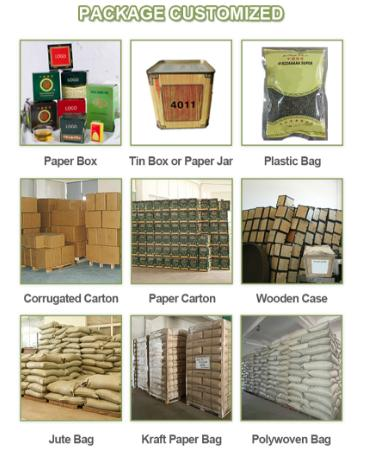
- Confirm if they can supply both bulk export packs (e.g., 20-25kg cartons, 30–50kg woven sacks) and private label retail boxes or pouches.
- For supermarket supply chains, insist on detailed packaging specs, barcoding, and carton labelling compliant with importer regulations.
Grades & Standards Explained
Gunpowder tea and Chunmee tea trade heavily on numerical grades, which reflect leaf size, tenderness, and appearance rather than taste alone.
Gunpowder grades (examples)
- 3505 different grades: Common export grade, good pellet uniformity, widely used in Africa (Morocco, Algeria) and Europe.
- 9501 / 9373/ 9475 / 9375/ 9575/ 9675: Differ in pellet size and tightness; higher codes often indicate better sorting and leaf tenderness in specific supplier catalogues.
- Temple of Heaven grade: Premium Gunpowder with very tight, small pellets and bright liquor, popular in higher‑end segments.
Chunmee grades (examples)
- 41022 different grades:: Recognized as one of the higher quality Chunmee tea grades with fine, even leaves.
- 4011: Also high grade, slightly thicker leaf than 41022, targeted at markets needing quality with volume.
- 9371: More economical, coarser leaf, suitable for value‑driven markets where price is critical.
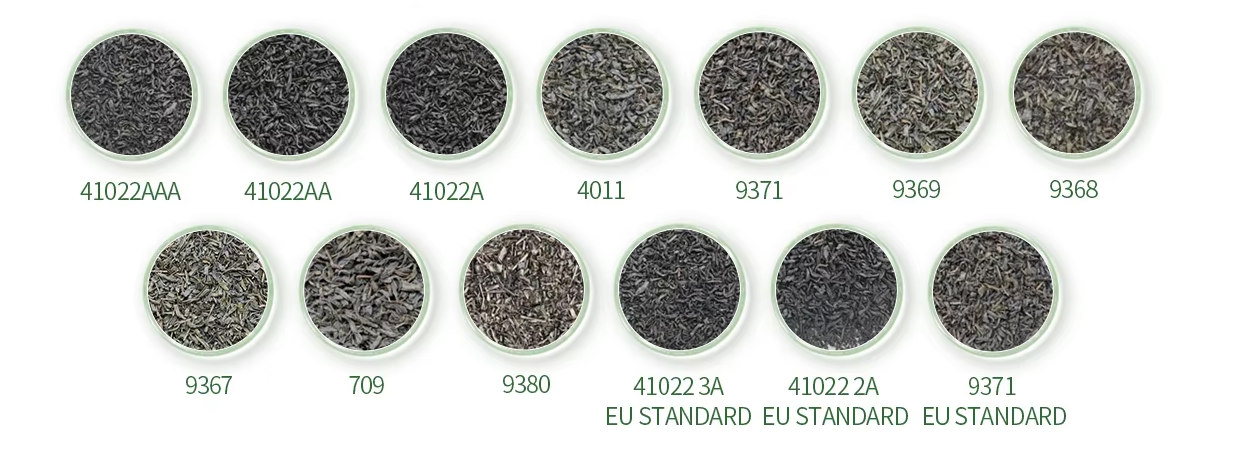
Because grading conventions vary slightly by factory, experienced buyers always request physical samples, photos, and technical specs before confirming contracts.
Key Buying Factors for B2B Green Tea
When evaluating offers for “gunpowder tea wholesale” or “bulk green tea china”, focus on measurable quality parameters, not only sample taste.
1. Moisture level
- Ideal export moisture is typically controlled around 6–8% to ensure shelf life and prevent mold during long sea transport.
- Suppliers should provide moisture test results per batch, especially for shipments to humid climates.
2. Leaf grade and uniformity
- Check leaf size, percentage of broken or stalky material, and uniformity across the lot.
- Better uniformity leads to consistent liquor color and taste, which is crucial for brand products and supermarket lines.
3. Color and appearance
- For both Gunpowder tea and Chunmee tea, a clean grey‑green or dark green color with some luster generally indicates proper processing and storage.
- Dull, yellowish, or dusty appearance usually signals older stock or poor handling.
4. Shelf life
- With correct moisture and packaging, Chinese green tea can maintain quality for 3–10 years in normal warehouse conditions.
- For longer transit routes (e.g., China to Africa), ask suppliers about container loading, fumigation, and storage practices.
5. Origin
- Zhejiang and Anhui are classic regions for Chinese green teas, offering established supply chains and experienced processors.
- Some factories also source from Jiangxi and other provinces to balance price and quality for specific grades.
Application Markets: Africa, Middle East, Europe
Different regions have distinct preferences for Gunpowder tea and Chunmee tea, and a good exporter understands these nuances.
- North Africa (Morocco, Algeria, etc.)
- Strong demand for Gunpowder (especially 3505 and similar grades) as a base for traditional mint tea.
- Buyers often require consistent liquor strength and color across multiple shipments.
- West Africa (Mali, Senegal, Mauritania, etc.)
- Mix of Gunpowder and Chunmee, with well‑known local brands sourcing directly from Chinese factories.
- Price sensitivity is high, but leaf appearance and cup color still matter for consumer trust.
- Middle East & Central Asia
- Growing use of Chunmee tea and Gunpowder tea for both traditional brewing and modern tea bags.
- Some markets prefer brighter liquor and cleaner flavor, so higher Chunmee tea grades are often specified.
- Europe
- Imports both bulk green tea for ethnic channels and EU‑standard, residue‑controlled lots for mainstream retail.
- European clients tend to demand stricter documentation, testing, and certification.
Packaging & Private Label Options
For OEM/private label and supermarket supply chains, packaging capability is as important as leaf quality.
Typical export packaging for bulk buyers:
- 20-25kg or 30–50kg paper bags or kraft bags with plastic inner lining
- Woven polypropylene sacks with inner food‑grade bag
- Big cartons with multiple inner paper bags for higher‑grade products
Private label / retail options:
- Printed paper boxes or tins with inner foil bags or sachets
- Heat‑sealed aluminum or plastic laminate pouches with valves or zippers
- Tea bags (enveloped or non‑enveloped) using Gunpowder or Chunmee as raw material
A competent china green tea supplier should support artwork checking, barcode printing, language‑specific labelling, and export carton design according to retailer requirements.
Why Choose RUIXING TEA
RUIXING TEA is a dedicated Chinese green tea manufacturer located in Zhejiang, focusing on Gunpowder tea and Chunmee tea production for export markets. The company has more than 25 years of experience and positions itself as an OEM, HACCP/ISO‑certified green tea producer with a strong emphasis on Gunpowder tea and Chunmee tea exports.
Practical advantages for B2B buyers:
- Direct factory supply: better cost control and stable leaf quality across harvests.
- Product focus: Gunpowder tea and Chunmee tea lines tailored to African, Middle Eastern, and European markets.
- Export experience: long‑term shipments of Gunpowder tea and Chunmee tea to Africa and other regions, supplying well‑known local brands.
- Certifications: HACCP and ISO systems in place, aligning with supermarket and brand requirements.
- OEM/private label: capacity to act as an OEM green tea manufacturer for international brands.

For buyers looking specifically for “gunpowder tea wholesale”, “chunmee tea supplier”, or “bulk green tea china” with private label options, this type of focused manufacturer offers a pragmatic balance between price and reliability.
Expert Insights: Seasonal Prices, Harvests, and Export Risks
Real tea trade is shaped by harvest cycles, logistics, and policy changes—factors that experienced exporters manage daily.
- Seasonal price fluctuation
- Early spring (first flush) teas are usually more expensive due to limited output and higher quality, but bulk Gunpowder/Chunmee for Africa and the Middle East is often sourced across several pickings to stabilize cost.
- Prices can rise before major buying seasons in Morocco and West Africa when multiple importers compete for similar grades.
- Harvest differences
- Early harvests give brighter liquor and more tender leaves; later harvests may have slightly coarser leaf but better availability and lower cost.
- A good supplier blends different lots to maintain a consistent cup, especially for long‑running brands and supermarket labels.
- Export and logistics risks
- Freight rate volatility and port congestion can affect CIF offers, so many buyers prefer FOB contracts and control their own shipping.
- Customs inspections, residue testing, and documentation errors can delay shipments, so working with an exporter with proven routes to Africa, the Middle East, and Europe reduces risk.
For importers, wholesalers, private label buyers, and supermarket chains, the most efficient way to secure stable Gunpowder tea and Chunmee tea supply is to work with a specialized china green tea supplier that owns or closely manages production in Zhejiang and other core regions. A factory‑based exporter like SHENGZHOU RUIXING TEA INDUSTRY CO.,LTD., with HACCP/ISO certifications and long‑term shipments to Africa, the Middle East, Central Asia and Europe, aligns well with the requirements of serious B2B tea buyers seeking both price competitiveness and reliability.
FAQ: China Green Tea Supplier, Gunpowder tea & Chunmee tea
1. What is the difference between Gunpowder and Chunmee tea?
Gunpowder is tightly rolled into pellets with a stronger, sometimes slightly smoky taste, while Chunmee has curved eyebrow‑shaped leaves and a lighter, tangier cup.
2. Which green tea is better for export, Gunpowder tea or Chunmee tea?
Both are strong export items: Gunpowder tea is preferred in Morocco and parts of Africa for mint tea, while Chunmee tea sells widely across Africa and the Middle East with more grade flexibility.
3. How do I choose a reliable china green tea supplier?
Prioritize factory‑based exporters in regions like Zhejiang with HACCP/ISO certifications, proven shipments to your destination, clear grading, and flexible packaging and OEM options.
4. What are common Gunpowder tea wholesale grades from China?
Typical export grades include 3505, 9373, 9374, 9501, 9475, 9575, 9675, and premium Temple of Heaven, each defined by pellet size, tightness, and leaf tenderness.
5. What are common Chunmee tea grades (41022, 4011, 9371)?
41022 and 4011 are higher Chunmee grades with finer, more even leaves, while 9371 is a more economical grade suited to price‑sensitive markets.
6. What certifications should a china green tea supplier have?
For B2B imports and supermarket supply, look for HACCP and ISO systems at minimum, plus residue testing reports where required by local regulations.
7. How can I import tea from China (trade terms)?
You can purchase under FOB terms (you arrange shipping from a Chinese port) or CIF terms (the supplier includes freight and insurance); experienced exporters regularly handle both for Africa, the Middle East, Central Asia and Europe.
8. What is the usual MOQ (Mimimum order quantity)for bulk green tea from China?
MOQ often start from one container per shipment, with flexibility to combine different Gunpowder tea and Chunmee tea grades depending on supplier capacity and your market test plans.
9. How long can Chinese green tea be stored for export markets?
With proper moisture control and packaging, Gunpowder and Chunmee can generally keep commercial quality for 3-10 years, which suits long sea routes to Africa, the Middle East and Europe.
10. Do you support OEM/private label?
Yes, the company positions itself as an OEM green tea manufacturer with HACCP/ISO systems, supplying Gunpowder tea and Chunmee tea in bulk and branded formats to international buyers.
Recent Posts
-

-
-
-
-